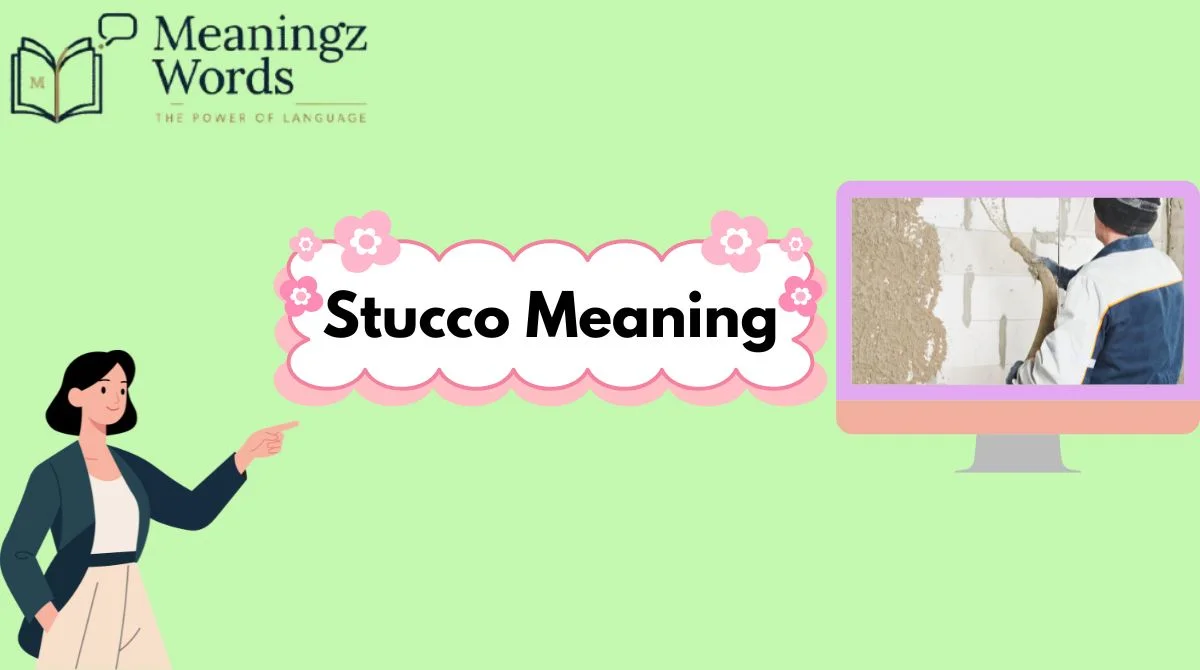
Stucco means a durable plaster-like material used as a decorative and protective coating on walls, ceilings, and building exteriors.
People usually search for “stucco meaning” when they see it on houses, architecture videos, construction projects, or home design discussions.
Understanding stucco helps homeowners, students, and anyone interested in buildings recognize this popular construction material and its purpose.
Quick Answer Box
| Information | Answer |
|---|---|
| Meaning | A plaster-like coating used to cover and protect walls and surfaces |
| Full Form | Stucco is not an abbreviation; it is a construction material name |
| Pronunciation | STUK-oh (/ˈstʌk.oʊ/) |
| Category | Construction material / Architectural finish |
| Tone | Neutral, professional |
| Used On | Houses, buildings, walls, ceilings, exterior surfaces |
| Difficulty Level | Easy |
| One-line Definition | Stucco is a cement-based or plaster-based finish applied to walls for protection, texture, and appearance |
What Does Stucco Mean?
Stucco is a type of plaster coating applied over walls and surfaces to create a strong, smooth, textured, or decorative finish.
In simple words, stucco works like a protective “skin” for a building. It can improve the appearance of a house while also helping protect the structure from weather conditions.
Stucco is commonly seen on:
- Residential homes
- Commercial buildings
- Mediterranean-style houses
- Spanish-style architecture
- Outdoor walls
- Decorative structures
When someone says, “This house has stucco walls,” they usually mean the outside walls are covered with this textured exterior finish.
What Is Stucco Made Of?
Traditional stucco is usually made from a mixture of:
- Cement
- Sand
- Water
- Lime (in some mixtures)
Modern stucco systems may also include:
- Acrylic materials
- Synthetic coatings
- Fibers for strength
- Waterproofing additives
The exact ingredients depend on the type of stucco and where it is being used.
Origin and History of Stucco
The idea behind stucco is thousands of years old. Ancient civilizations used plaster-like materials to decorate and protect buildings.
Early forms of stucco were used by:
- Ancient Egyptians
- Greeks
- Romans
The Romans especially developed advanced plaster techniques and used them in homes, temples, and public buildings.
Over time, stucco evolved from a simple protective coating into a popular architectural design feature used around the world.
Why Do People Use Stucco?
Stucco is popular because it offers both practical and visual benefits.
1. Attractive Appearance
Stucco can create many different looks, including:
- Smooth finishes
- Rough textures
- Patterns
- Decorative designs
- Modern minimalist styles
It allows homeowners to customize the appearance of their buildings.
2. Weather Protection
Exterior stucco helps protect walls from:
- Sun exposure
- Wind
- Rain
- Temperature changes
A properly installed stucco system can add an extra protective layer to a building.
3. Durability
High-quality stucco can last for many years when installed and maintained correctly.
Its strength makes it a common choice for exterior walls in many climates.
4. Energy Efficiency
Stucco itself is not insulation, but it can work together with insulation systems to help regulate indoor temperatures.
Types of Stucco
There are several common types of stucco used in construction.
Traditional Stucco
Traditional stucco is usually made from cement, sand, lime, and water.
It is known for:
- Strength
- Classic appearance
- Long-lasting performance
Synthetic Stucco
Synthetic stucco, often called EIFS (Exterior Insulation and Finish System), uses modern materials.
It may provide:
- More design options
- Lightweight construction
- Better insulation support
Acrylic Stucco
Acrylic stucco contains acrylic polymers that can improve:
- Flexibility
- Color retention
- Crack resistance
Stucco vs Plaster: What Is the Difference?
Many people confuse stucco with plaster because both are applied as coatings.
| Feature | Stucco | Plaster |
|---|---|---|
| Main Use | Mostly exterior walls | Mostly interior walls |
| Strength | Usually stronger for outdoor use | Designed mainly for indoor surfaces |
| Materials | Often cement-based | Often gypsum or lime-based |
| Weather Resistance | Higher | Lower |
| Common Location | Outside buildings | Inside rooms |
In simple terms:
Stucco is usually for the outside of buildings, while plaster is commonly used indoors.
Stucco vs Siding: Which Is Different?
Stucco and siding are both exterior wall finishes, but they create different looks.
| Feature | Stucco | Siding |
|---|---|---|
| Appearance | Textured, solid surface | Panels or boards |
| Material | Cement/plaster coating | Vinyl, wood, metal, fiber cement |
| Maintenance | Requires crack monitoring | May require replacement of damaged panels |
| Style | Mediterranean, modern, traditional | Many styles |
The better option depends on climate, budget, and design preference.
Real-Life Examples of Stucco
Example 1: Home Design
“They painted their stucco house white to create a modern look.”
Meaning:
The outside walls of the house were covered with stucco and given a white finish.
Example 2: Construction
“The contractor repaired cracks in the stucco before repainting the exterior.”
Meaning:
The building’s protective outer coating needed maintenance.
Example 3: Architecture
“The neighborhood has many stucco homes with Spanish-style designs.”
Meaning:
Many houses use stucco as part of their architectural style.
Common Questions About Stucco
Is Stucco Only Used Outside?
No. Although stucco is most commonly used on exterior walls, some decorative stucco finishes can also be used indoors.
Is Stucco Waterproof?
Stucco is water-resistant, but it is not completely waterproof.
Proper installation, drainage, and maintenance are important to prevent moisture problems.
Does Stucco Crack Easily?
Small cracks can appear over time because buildings naturally move and materials expand or contract.
Proper installation can reduce cracking.
Is Stucco Expensive?
The cost depends on:
- Material type
- Labor costs
- Building size
- Design complexity
It can be affordable compared with some premium exterior finishes, but installation quality strongly affects the final price.
Common Misunderstandings About Stucco
Myth: Stucco Is Just Paint
Reality: Stucco is a physical layer of material applied to walls. Paint is only a surface color coating.
Myth: All Stucco Looks the Same
Reality: Stucco can have many textures, colors, and finishes.
Myth: Stucco Never Needs Maintenance
Reality: Like any building material, stucco needs inspection and occasional repairs.
How to Use the Word “Stucco” in Conversation
Conversation 1
Person A: “What material is this house made with?”
Person B: “The exterior is covered with stucco.”
Explanation:
The speaker is referring to the outside wall finish.
Conversation 2
Person A: “Why are they fixing the walls?”
Person B: “They’re repairing damaged stucco.”
Explanation:
The damaged layer covering the wall is being restored.
FAQs
What does stucco mean in simple words?
Stucco is a strong plaster-like material used as a protective and decorative coating on walls.
What is stucco made from?
Traditional stucco is usually made from cement, sand, water, and sometimes lime.
Is stucco a type of concrete?
No. Stucco and concrete are related because both may contain cement, but they are different materials with different purposes.
What does a stucco house mean?
A stucco house is a home whose exterior walls are covered with a stucco finish.
Is stucco good for houses?
Yes, stucco can be a durable and attractive choice when properly installed and maintained.
Why do architects use stucco?
Architects use stucco because it provides design flexibility, durability, and a clean exterior appearance.
Final Thoughts
Stucco means a plaster-like building material used to cover, protect, and decorate walls. It has been used for centuries and remains popular because it combines appearance with durability.
Whether you see it on a modern home, an old building, or an architecture project, stucco refers to the protective and decorative surface layer that gives the structure its unique look.
Understanding the meaning of stucco makes it easier to recognize construction styles and discuss building materials confidently.

Noah Collins is a language writer and vocabulary researcher with a passion for making English easy to understand. As a contributor to MeaningzWords, he creates clear, accurate, and engaging content that helps readers expand their vocabulary, understand word meanings, and improve their communication skills with confidence.


