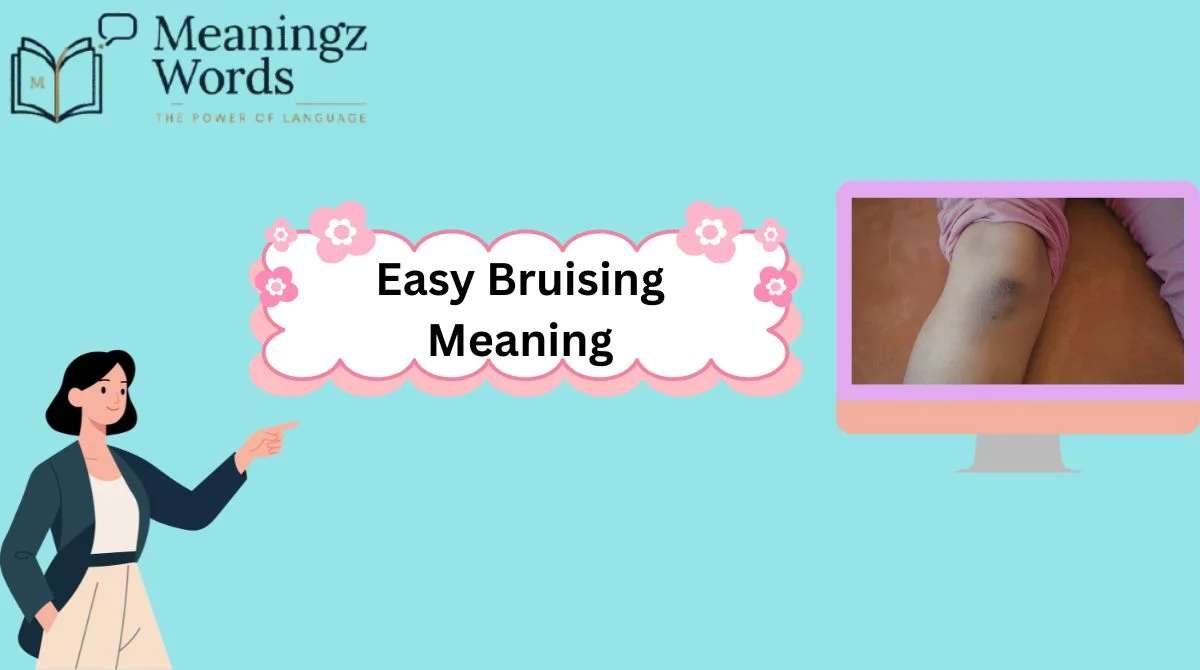
Easy bruising means a person develops bruises more easily than expected, often after a minor bump or even without remembering an injury.
People usually come across this term during a doctor’s visit, while reading medical reports, searching online about unexplained bruises, or discussing symptoms with family.
Understanding what easy bruising means can help you decide whether it’s a harmless tendency or a sign that deserves medical attention.
Quick Answer Box
| Topic | Answer |
|---|---|
| Meaning | Bruising more easily than most people, often after minor injuries or with no remembered injury |
| Full Form | Not applicable |
| Pronunciation | EE-zee BROO-zing |
| Category | Medical term / Health symptom |
| Tone | Neutral, clinical |
| Used On | Healthcare, medical articles, doctor’s appointments, everyday conversations |
| Difficulty Level | Beginner |
| One-Line Definition | Easy bruising is a condition where bruises appear more often or more easily than normal. |
What Does Easy Bruising Mean?
Easy bruising refers to a tendency for the skin to develop bruises after very little pressure or injury. A bruise forms when tiny blood vessels called capillaries break beneath the skin, allowing blood to collect in nearby tissues.
Most people bruise after a noticeable hit or fall. Someone with easy bruising may develop large or frequent bruises after:
- Light bumps against furniture
- Carrying heavy bags
- Minor sports activities
- Blood pressure cuff use
- Sometimes without remembering any injury
Easy bruising itself is not a disease. Instead, it is a symptom that may have many possible causes.
How Does a Bruise Form?
Understanding how bruises develop makes the meaning of easy bruising much clearer.
The process usually follows these steps:
- Small blood vessels under the skin break.
- Blood leaks into surrounding tissue.
- The skin changes color as the trapped blood breaks down.
- The body slowly reabsorbs the blood.
- The bruise fades over one to three weeks.
With easy bruising, this process happens after much smaller injuries than usual.
What Causes Easy Bruising?
Easy bruising has many possible causes. Some are completely harmless, while others require medical evaluation.
Common causes include:
- Aging, which makes skin thinner
- Fragile blood vessels
- Vitamin C deficiency
- Vitamin K deficiency
- Iron deficiency in some cases
- Certain medications
- Blood-thinning medicines
- Long-term steroid use
- Family history
- Intense physical activity
- Medical conditions affecting blood clotting
Many healthy people naturally bruise more easily than others.
Who Is More Likely to Experience Easy Bruising?
Certain groups develop bruises more easily than others.
These include:
- Older adults
- People with fair or thin skin
- Women
- Individuals taking blood-thinning medication
- People with bleeding disorders
- Those with nutritional deficiencies
- People using corticosteroids for long periods
Being in one of these groups does not automatically mean something is seriously wrong.
What Does Easy Bruising Look Like?
Easy bruising often appears as:
- Purple, blue, or black patches
- Bruises larger than expected
- Bruises after very small bumps
- Multiple bruises at the same time
- Bruises on the arms or legs
- Bruises that take a long time to disappear
Sometimes the bruise is painful, but many are painless.
Easy Bruising vs Normal Bruising
| Feature | Normal Bruising | Easy Bruising |
|---|---|---|
| Cause | Noticeable injury | Minor or unnoticed injury |
| Frequency | Occasional | Frequent |
| Size | Usually proportional to injury | Often larger than expected |
| Healing | One to three weeks | Similar healing time but occurs more often |
| Medical concern | Usually none | Depends on accompanying symptoms |
When Is Easy Bruising Normal?
Easy bruising is often harmless when:
- Bruises happen occasionally.
- You recently started an activity that causes minor bumps.
- There is a family history of easy bruising.
- You are getting older.
- You are taking medication known to increase bruising.
In these situations, bruising may simply reflect normal changes in the body.
When Could Easy Bruising Be a Sign of a Health Problem?
Although easy bruising is often harmless, it can sometimes signal an underlying medical condition.
Seek medical advice if bruising is accompanied by:
- Frequent nosebleeds
- Bleeding gums
- Blood in urine or stool
- Heavy menstrual bleeding
- Very large bruises
- Bruises without any injury
- Extreme tiredness
- Persistent fever
- Unexplained weight loss
- Family history of bleeding disorders
Doctors may recommend blood tests to identify the cause.
Can Medications Cause Easy Bruising?
Yes. Several medications make bruising more likely because they affect blood clotting or weaken blood vessels.
Examples include:
- Aspirin
- Warfarin
- Heparin
- Clopidogrel
- Some antidepressants
- Corticosteroids
- Certain anti-inflammatory medicines
Never stop prescribed medication without consulting your healthcare provider.
Can Vitamin Deficiencies Lead to Easy Bruising?
Yes.
Certain vitamins help maintain healthy blood vessels and normal clotting.
The most common deficiencies linked with bruising include:
| Nutrient | Role |
|---|---|
| Vitamin C | Supports healthy blood vessels |
| Vitamin K | Helps blood clot properly |
| Iron | Supports healthy blood production |
| Protein | Helps maintain body tissues |
A balanced diet often helps prevent nutritional deficiencies.
How Do Doctors Find the Cause of Easy Bruising?
Diagnosis usually begins with questions about:
- When bruising started
- Family history
- Current medications
- Other bleeding symptoms
- Recent illnesses
A healthcare provider may also perform:
- Physical examination
- Complete blood count (CBC)
- Blood clotting tests
- Liver function tests
- Additional testing if needed
These tests help identify whether bruising is related to blood disorders, medication, nutrition, or another condition.
Can Easy Bruising Be Prevented?
Not every cause can be prevented, but you can reduce your risk by:
- Eating a balanced diet
- Getting enough vitamin C and vitamin K
- Protecting your skin during sports
- Avoiding unnecessary injuries
- Discussing medication side effects with your doctor
- Managing chronic health conditions
Common Misunderstandings About Easy Bruising
Many myths surround bruising.
| Myth | Fact |
|---|---|
| Easy bruising always means leukemia. | Most cases have much less serious causes. |
| Only older people bruise easily. | Anyone can experience easy bruising. |
| Every bruise needs treatment. | Many bruises heal naturally. |
| Bruises always hurt. | Some bruises cause little or no pain. |
| Vitamins always fix bruising. | Only bruising caused by deficiencies improves with supplements. |
Examples of How “Easy Bruising” Is Used
Example 1
Patient: “I’ve noticed I get bruises after the smallest bump.”
Doctor: “That sounds like easy bruising. Let’s review your medications and medical history.”
Explanation: The doctor is describing a symptom rather than making a diagnosis.
Example 2
Friend: “Where did that bruise come from?”
Person: “I’m not sure. I bruise really easily.”
Explanation: In everyday conversation, “I bruise easily” means small impacts often leave visible bruises.
Example 3
Medical Record:
“Patient reports easy bruising over the past three months.”
Explanation: This tells healthcare providers the patient experiences bruises more frequently than expected.
Frequently Asked Questions
Is easy bruising a disease?
No. It is a symptom that may have many different causes.
Can stress cause easy bruising?
Stress alone is not considered a direct cause, although it may indirectly affect overall health. Easy bruising should not be assumed to result from stress without proper evaluation.
Does easy bruising always mean a vitamin deficiency?
No. While vitamin deficiencies can contribute, medications, aging, genetics, and medical conditions are also common causes.
Should I worry if I suddenly start bruising easily?
Sudden, unexplained bruising—especially if accompanied by other bleeding symptoms or illness—should be assessed by a healthcare professional.
Can children have easy bruising?
Yes. Active children often bruise during play, but frequent, severe, or unexplained bruising should be evaluated by a doctor.
How long do bruises usually last?
Most bruises fade within one to three weeks, though larger bruises may take longer.
Key Takeaways
- Easy bruising means bruises develop after minor injuries or sometimes without a remembered injury.
- It is a symptom rather than a disease.
- Common causes include aging, medications, fragile blood vessels, and vitamin deficiencies.
- Many cases are harmless, but frequent or unexplained bruising should be discussed with a healthcare professional.
- Additional symptoms such as unusual bleeding, large bruises, or persistent fatigue may require prompt medical evaluation.
Conclusion
Easy bruising is a common term used to describe a tendency to develop bruises more easily than expected.
For many people, it is related to normal aging, genetics, or medication use and is not a serious problem.
However, if bruising becomes frequent, appears without injury, or occurs alongside other unusual bleeding or health changes, it’s important to seek medical advice.
Understanding the meaning of easy bruising helps you recognize when it’s simply a normal variation and when it may be worth investigating further.

Noah Collins is a language writer and vocabulary researcher with a passion for making English easy to understand. As a contributor to MeaningzWords, he creates clear, accurate, and engaging content that helps readers expand their vocabulary, understand word meanings, and improve their communication skills with confidence.


