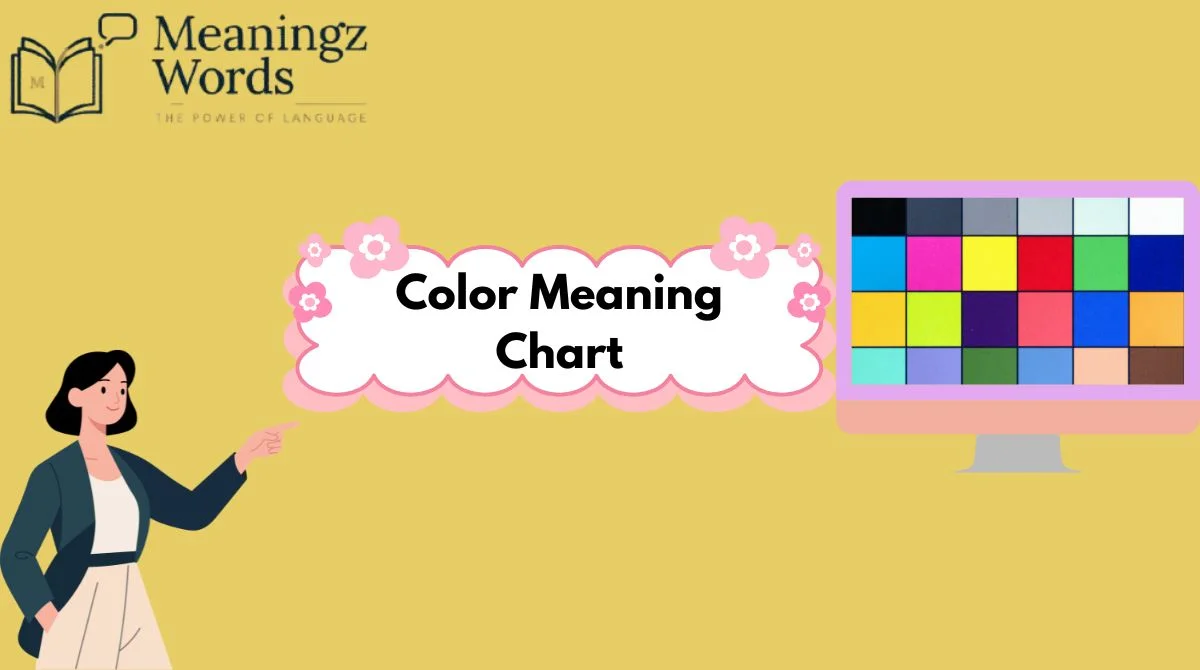
A color meaning chart explains what different colors represent and how people commonly interpret them in emotions, culture, branding, art, and everyday life.
People search for color meanings when choosing designs, understanding psychology, creating content, decorating spaces, or exploring symbolism.
Knowing what colors communicate can help you make better visual and personal choices.
Quick Answer Box
| Category | Details |
|---|---|
| Meaning | A guide that explains the symbolism, emotions, and associations connected with different colors |
| Full Form | No full form (color meaning chart is a descriptive phrase) |
| Pronunciation | Color meaning chart: “KUH-lor MEE-ning chart” |
| Category | Psychology, symbolism, design, communication |
| Tone | Informative, emotional, visual |
| Used On | Branding, fashion, art, websites, social media, education, decoration |
| Difficulty Level | Beginner-friendly |
| One-line Definition | A color meaning chart shows what different colors may represent and how they influence human feelings and perceptions |
What Is a Color Meaning Chart?
A color meaning chart is a visual or written guide that connects colors with common meanings, emotions, and symbolic associations.
Colors are not just visual experiences. They can influence how people feel, react, and understand messages. For example:
- Red is often linked with passion, energy, and urgency.
- Blue is commonly associated with trust, calmness, and stability.
- Green often represents nature, growth, and balance.
- Black can symbolize power, elegance, or mystery.
However, color meanings are not universal rules. They can change depending on culture, personal experiences, context, and where the color is used.
Complete Color Meaning Chart
| Color | Common Meaning | Emotions Associated | Common Uses |
|---|---|---|---|
| Red | Passion, energy, strength | Excitement, love, urgency | Sales, warnings, romance, sports |
| Blue | Trust, peace, security | Calmness, confidence | Brands, technology, healthcare |
| Green | Nature, growth, renewal | Balance, freshness | Environment, health, finance |
| Yellow | Happiness, creativity, optimism | Joy, attention | Children’s brands, advertising |
| Orange | Enthusiasm, warmth, adventure | Energy, friendliness | Food brands, entertainment |
| Purple | Luxury, imagination, spirituality | Creativity, mystery | Beauty, premium products |
| Pink | Love, kindness, softness | Care, affection | Fashion, beauty, relationships |
| Black | Power, elegance, mystery | Seriousness, authority | Luxury, fashion, technology |
| White | Purity, simplicity, peace | Cleanliness, openness | Healthcare, minimal designs |
| Gray | Neutrality, balance | Professionalism, calm | Corporate designs |
| Brown | Earth, reliability, comfort | Warmth, security | Food, nature, handmade products |
| Gold | Success, wealth, achievement | Prestige, value | Luxury products, awards |
| Silver | Modernity, technology, sophistication | Innovation, elegance | Electronics, futuristic designs |
The Psychology Behind Color Meanings
Color psychology studies how colors may affect human emotions, behavior, and perception.
People often respond to colors automatically because the brain connects certain colors with experiences, memories, and cultural messages.
For example:
- A hospital may use blue and white because they create feelings of cleanliness and trust.
- A fast-food company may use red and yellow because they attract attention and feel energetic.
- A luxury brand may use black and gold to create a premium image.
Color psychology is useful, but it is not an exact science. The same color can create different feelings for different people.
Color Meaning Chart by Emotion
Colors That Represent Love and Romance
| Color | Meaning |
|---|---|
| Red | Deep passion, attraction, desire |
| Pink | Sweetness, affection, care |
| Purple | Romantic mystery and imagination |
Example:
“Her wedding theme uses pink and red because these colors represent love and romance.”
Meaning: The colors were chosen to create a loving emotional atmosphere.
Colors That Represent Happiness and Positivity
| Color | Meaning |
|---|---|
| Yellow | Happiness, hope, creativity |
| Orange | Fun, excitement, friendliness |
| Green | Freshness and positive growth |
These colors are often used in cheerful designs, children’s products, and social media content.
Colors That Represent Power and Authority
| Color | Meaning |
|---|---|
| Black | Strength, elegance, control |
| Dark Blue | Trust, leadership, professionalism |
| Gold | Success and achievement |
These colors frequently appear in business logos, formal clothing, and luxury products.
Color Meanings in Different Cultures
Color symbolism can change around the world.
White
In many Western cultures:
- White may represent purity, weddings, and peace.
In some Asian cultures:
- White can be associated with mourning and remembrance.
Red
In many countries:
- Red represents love, celebration, and energy.
In some cultures:
- Red may symbolize luck, prosperity, or important events.
Green
Common meanings:
- Nature
- Growth
- Renewal
But cultural and religious meanings may vary.
This is why brands often research cultural color meanings before entering new markets.
Color Meaning in Branding and Marketing
Businesses use colors strategically because colors can influence how customers perceive a brand.
| Color | Brand Message |
|---|---|
| Blue | Reliable, safe, professional |
| Red | Exciting, bold, energetic |
| Green | Natural, healthy, eco-friendly |
| Black | Premium, powerful, luxurious |
| Yellow | Friendly, positive, creative |
Example:
A health brand using green may want customers to associate it with natural ingredients and wellness.
A technology company using blue may want to appear trustworthy and secure.
Color Meanings in Design
Designers use color meaning charts when creating:
- Websites
- Logos
- Advertisements
- Presentations
- Social media graphics
- Packaging
Choosing the right color helps communicate a message without using words.
For example:
A meditation app may use soft blue or green because these colors create a peaceful feeling.
A gaming brand may use black, red, or purple to create excitement and mystery.
Color Meaning Chart for Personality
Many people use colors to describe personality traits.
| Color Preference | Common Personality Associations |
|---|---|
| Red | Confident, energetic, passionate |
| Blue | Calm, loyal, thoughtful |
| Green | Balanced, caring, connected to nature |
| Yellow | Creative, optimistic, social |
| Purple | Imaginative, unique |
| Black | Independent, serious, stylish |
| Pink | Kind, emotional, caring |
These associations are popular interpretations, not scientific personality tests.
Color Meanings on Social Media
Colors are important on platforms like Instagram, TikTok, Snapchat, and Facebook because visuals communicate quickly.
Red on Social Media
Often creates:
- Excitement
- Attention
- Strong emotions
Used for:
- Viral posts
- Announcements
- Promotions
Black and White
Often creates:
- Minimal style
- Professional appearance
- Artistic feeling
Bright Colors
Often attract:
- Younger audiences
- Creative communities
- Entertainment-focused viewers
Color Meanings in Gaming
Gamers often connect colors with characters, teams, and game environments.
| Color | Gaming Association |
|---|---|
| Red | Danger, power, attack |
| Blue | Magic, intelligence, protection |
| Green | Nature, healing, survival |
| Purple | Rare items, mystery, special abilities |
| Black | Villains, darkness, strength |
Example:
“A character with a purple weapon may appear more powerful or rare.”
Color Meanings in Fashion
Fashion uses colors to communicate style and personality.
| Color | Fashion Message |
|---|---|
| Black | Elegant, confident, timeless |
| White | Clean, simple, fresh |
| Red | Bold, attractive, noticeable |
| Blue | Calm and trustworthy |
| Green | Natural and refreshing |
| Gold | Luxury and celebration |
The meaning also depends on clothing style, occasion, and culture.
How to Choose the Right Color
Consider these questions:
1. What Feeling Do You Want?
Ask:
- Should it feel professional?
- Fun?
- Calm?
- Expensive?
- Natural?
2. Who Is Your Audience?
Different groups may respond differently to colors.
For example:
- Children often respond well to bright colors.
- Professional audiences may prefer simple, trustworthy colors.
3. Where Will the Color Be Used?
A color that works for a logo may not work for a bedroom wall or website background.
Context matters.
Common Mistakes About Color Meanings
Mistake 1: Thinking Every Color Has One Meaning
A color can have multiple meanings.
Example:
Black can represent:
- Luxury
- Mystery
- Sadness
- Power
The context decides the interpretation.
Mistake 2: Ignoring Cultural Differences
A color that feels positive in one culture may have a different meaning elsewhere.
Mistake 3: Choosing Colors Only Because They Look Good
A beautiful color combination may still communicate the wrong message.
A business should consider emotional impact, audience, and purpose.
Frequently Asked Questions
What is the meaning of a color chart?
A color meaning chart explains the emotions, symbolism, and associations connected with different colors.
Which color represents happiness?
Yellow is commonly associated with happiness, optimism, and creativity.
What color represents trust?
Blue is often linked with trust, reliability, and security.
What color represents love?
Red is commonly connected with passion and romantic love, while pink represents affection and kindness.
What color represents success?
Gold is often associated with achievement, wealth, and success.
Are color meanings the same everywhere?
No. Color meanings can change depending on culture, personal experiences, and context.
Is color psychology scientifically proven?
Color psychology provides useful insights, but color responses are influenced by many factors and should not be treated as absolute rules.
Final Thoughts
A color meaning chart helps explain how different colors communicate emotions, ideas, and messages.
Colors can influence branding, design, fashion, communication, and personal expression.
The most important thing to remember is that colors do not have only one fixed meaning.
Their impact depends on the situation, culture, audience, and purpose. Use color meanings as a helpful guide, not a strict rule.

Noah Collins is a language writer and vocabulary researcher with a passion for making English easy to understand. As a contributor to MeaningzWords, he creates clear, accurate, and engaging content that helps readers expand their vocabulary, understand word meanings, and improve their communication skills with confidence.