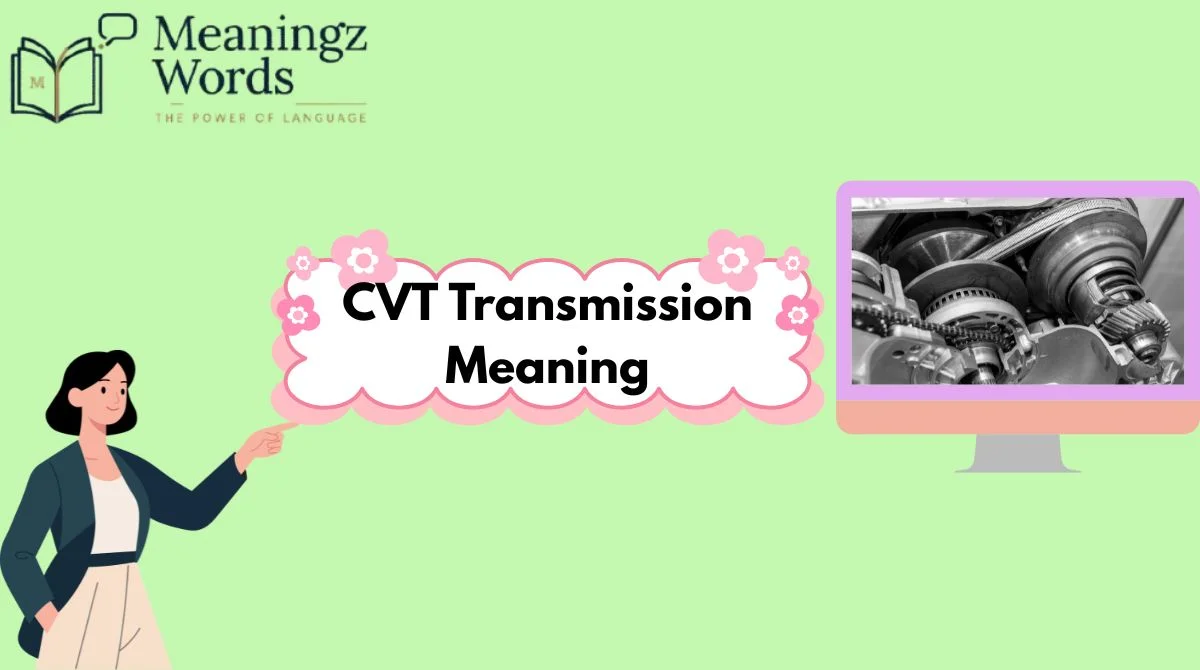
CVT transmission meaning refers to a Continuously Variable Transmission, a type of automatic gearbox that can change through an unlimited range of gear ratios instead of using fixed gears like traditional automatic transmissions.
People usually search this term when buying a car, comparing vehicle features, or trying to understand why some cars feel different while driving.
Knowing how a CVT works can help you choose the right vehicle and understand its benefits and limitations.
Quick Answer Box
| Category | Details |
|---|---|
| Meaning | CVT Transmission |
| Full Form | Continuously Variable Transmission |
| Pronunciation | See-Vee-Tee Transmission |
| Category | Automotive technology / Vehicle transmission system |
| Tone | Technical but commonly used in everyday car discussions |
| Used On | Cars, SUVs, hybrid vehicles, motorcycles, and some scooters |
| Difficulty Level | Beginner-friendly |
| One-line Definition | A CVT is an automatic transmission that smoothly changes gear ratios without using traditional fixed gears. |
What Does CVT Transmission Mean?
A CVT transmission is an automatic transmission system that does not use traditional gears like a 5-speed, 6-speed, or 8-speed automatic gearbox.
Instead of switching between separate gears, a CVT continuously adjusts the gear ratio to keep the engine running at the most efficient speed.
In simple words:
A normal automatic transmission shifts between set gears, while a CVT smoothly changes ratios without noticeable gear changes.
This design helps many vehicles improve fuel efficiency and provide a smoother driving experience.
What Does CVT Stand For?
CVT stands for:
Continuously Variable Transmission
Each word explains how the system works:
- Continuously — The transmission can adjust constantly.
- Variable — The gear ratio can change.
- Transmission — The system transfers engine power to the wheels.
Unlike traditional transmissions that have a limited number of gears, a CVT can provide many possible gear ratios within its operating range.
How Does a CVT Transmission Work?
A CVT works differently from a traditional gearbox.
Most CVTs use three main parts:
- Two cone-shaped pulleys
- A belt or chain connecting the pulleys
- A control system that adjusts the pulley positions
When the vehicle speed changes, the pulleys move closer together or farther apart. This changes the effective size of the pulleys and adjusts the gear ratio.
For example:
- During acceleration, the CVT allows the engine to reach the power range it needs.
- During cruising, it keeps engine speed lower to save fuel.
The driver usually does not feel individual gear shifts because there are no fixed gears changing.
CVT Transmission vs Traditional Automatic Transmission
The biggest difference between a CVT and a traditional automatic transmission is how they handle gear changes.
| Feature | CVT Transmission | Traditional Automatic |
|---|---|---|
| Gear System | Uses continuously changing ratios | Uses fixed gears |
| Gear Shifts | Smooth and often unnoticeable | Noticeable shifting between gears |
| Fuel Efficiency | Usually better in many vehicles | Depends on design |
| Driving Feel | Smooth acceleration | More familiar shifting feeling |
| Maintenance | Requires specific service | Often more familiar repair process |
| Performance Feel | May feel different during acceleration | Feels more sporty to some drivers |
Why Do Car Manufacturers Use CVT Transmissions?
Many manufacturers use CVT technology because it offers several advantages.
Better Fuel Efficiency
A CVT can keep the engine operating near its most efficient speed. This may reduce fuel consumption, especially during normal city and highway driving.
Smoother Driving Experience
Because there are no traditional gear changes, acceleration can feel smoother without noticeable shifting.
Improved Engine Performance
A CVT can help the engine produce power more efficiently by selecting the best ratio for different driving conditions.
Smaller and Lighter Design
Some CVT systems are lighter and more compact compared with certain traditional automatic transmissions.
What Are the Advantages of a CVT Transmission?
A CVT transmission offers several benefits:
Smooth Acceleration
CVTs provide steady acceleration because they do not need to shift through separate gears.
Example:
A car with a CVT may accelerate from a stop with a continuous increase in speed rather than feeling small bumps between gear changes.
Better Gas Mileage
Many CVT-equipped vehicles are designed to save fuel by reducing unnecessary engine strain.
Comfortable City Driving
CVTs work well in stop-and-go traffic because they smoothly adjust to changing speeds.
Efficient Hybrid Vehicle Operation
Many hybrid cars use CVT-style systems because they work well with electric motors and gasoline engines.
What Are the Disadvantages of a CVT Transmission?
Although CVTs have benefits, they also have some drawbacks.
Different Driving Feel
Some drivers dislike the way a CVT feels because the engine may stay at a constant high RPM during acceleration.
This can create a feeling sometimes called the:
“rubber band effect”
This does not mean the transmission is failing. It describes the unusual sensation compared with traditional gear shifting.
Repair Costs
CVT repairs can be expensive because the technology is different from conventional transmissions.
Less Suitable for Heavy Performance Driving
Some high-performance drivers prefer traditional transmissions because they provide a more direct shifting experience.
Are CVT Transmissions Reliable?
CVT reliability depends on several factors:
- Vehicle manufacturer
- Transmission design
- Maintenance history
- Driving habits
- Proper fluid changes
Modern CVTs have improved significantly, and many vehicles use them successfully.
However, like any mechanical system, they require proper maintenance.
Following the manufacturer’s recommended service schedule is important for long-term performance.
How Long Does a CVT Transmission Last?
A well-maintained CVT transmission can often last many years and hundreds of thousands of miles.
Its lifespan depends on:
- Regular CVT fluid replacement
- Avoiding extreme overheating
- Proper driving habits
- Quality of the transmission design
Ignoring maintenance can shorten the life of any transmission, including a CVT.
CVT Transmission Examples in Real Life
You may see CVT technology in vehicles from brands such as:
- Toyota
- Honda
- Nissan
- Subaru
- Hyundai
- Kia
Many compact cars, hybrid vehicles, and fuel-efficient models use CVT transmissions.
Common examples include:
- Daily commuter cars
- Hybrid vehicles
- Small SUVs
- City vehicles
CVT Transmission Driving Example
Traditional Automatic Example
A driver presses the accelerator:
- First gear
- Second gear
- Third gear
- Fourth gear
The driver feels each shift.
CVT Example
A driver presses the accelerator:
- The transmission continuously adjusts the ratio.
- The engine stays near its efficient power range.
- Speed increases smoothly.
Common Questions About CVT Transmission Meaning
Is CVT an Automatic Transmission?
Yes. A CVT is a type of automatic transmission because it changes ratios automatically without requiring the driver to manually shift gears.
Does CVT Have Gears?
A CVT does not have traditional fixed gears like a normal automatic transmission.
Instead, it uses changing ratios created by pulley movement.
Some CVTs include simulated gear steps to make the driving experience feel more familiar.
Is CVT Better Than Automatic Transmission?
Neither is always better.
A CVT may be better for:
- Fuel economy
- Smooth city driving
- Comfortable daily use
A traditional automatic may be preferred for:
- Sportier driving feel
- Heavy-duty applications
- Drivers who enjoy noticeable gear shifts
The best choice depends on the vehicle and your driving needs.
Is CVT Transmission Good for Long-Term Use?
Yes, a CVT can be a good long-term choice when properly maintained.
The key factors are:
- Regular servicing
- Correct transmission fluid
- Avoiding unnecessary stress on the vehicle
Why Do Some People Dislike CVT Transmissions?
Some drivers dislike CVTs because:
- They feel different from traditional gearboxes.
- Engine noise can increase during hard acceleration.
- They do not provide the same shifting sensation.
However, many drivers appreciate their smoothness and efficiency.
Common CVT Transmission Problems
Possible CVT issues may include:
- Delayed acceleration
- Shaking or vibration
- Unusual noises
- Overheating
- Transmission warning lights
If these symptoms appear, professional inspection is recommended.
CVT vs DCT vs Automatic Transmission
| Type | Full Form | Main Feature |
|---|---|---|
| CVT | Continuously Variable Transmission | Smooth, continuous ratio changes |
| DCT | Dual-Clutch Transmission | Fast gear changes using two clutches |
| Automatic | Traditional Automatic Transmission | Uses fixed gears and torque converter |
Common Misunderstandings About CVT Transmissions
“CVTs Do Not Have Any Gears”
This is partly true. CVTs do not have traditional fixed gears, but they still create different gear ratios.
“All CVTs Are Unreliable”
This is incorrect. Reliability varies by manufacturer, design, and maintenance.
“CVTs Are Slow”
A CVT can provide quick acceleration because it keeps the engine in its optimal power range.
When Should You Choose a Car With a CVT?
A CVT may be a good choice if you want:
- Better fuel economy
- Smooth driving
- Comfortable commuting
- Lower fuel costs
You may prefer another transmission type if you want:
- Aggressive performance driving
- Traditional shifting feel
- Heavy towing capability
Frequently Asked Questions
What is CVT transmission meaning in cars?
CVT transmission meaning in cars refers to a continuously variable automatic gearbox that changes ratios smoothly instead of shifting between fixed gears.
What does CVT stand for in a vehicle?
CVT stands for Continuously Variable Transmission.
Is CVT better than automatic?
A CVT can be better for fuel efficiency and smooth driving, while traditional automatics may offer a more familiar driving feel.
Does CVT save fuel?
Many CVT vehicles achieve good fuel economy because they keep the engine operating efficiently.
Can a CVT transmission be repaired?
Yes, CVTs can be repaired, but repairs may require specialized knowledge and can sometimes be costly.
Conclusion
CVT transmission meaning simply refers to a Continuously Variable Transmission, an automatic gearbox designed to provide smooth and efficient power delivery without traditional gear changes.
CVTs are popular because they can improve fuel economy, reduce shifting sensations, and create a comfortable driving experience.
However, they have a different feel compared with traditional automatic transmissions, and proper maintenance is essential.
If you are buying a car with a CVT, focus on the vehicle’s reliability record, maintenance requirements, and whether its driving style matches your preferences.

Noah Collins is a language writer and vocabulary researcher with a passion for making English easy to understand. As a contributor to MeaningzWords, he creates clear, accurate, and engaging content that helps readers expand their vocabulary, understand word meanings, and improve their communication skills with confidence.