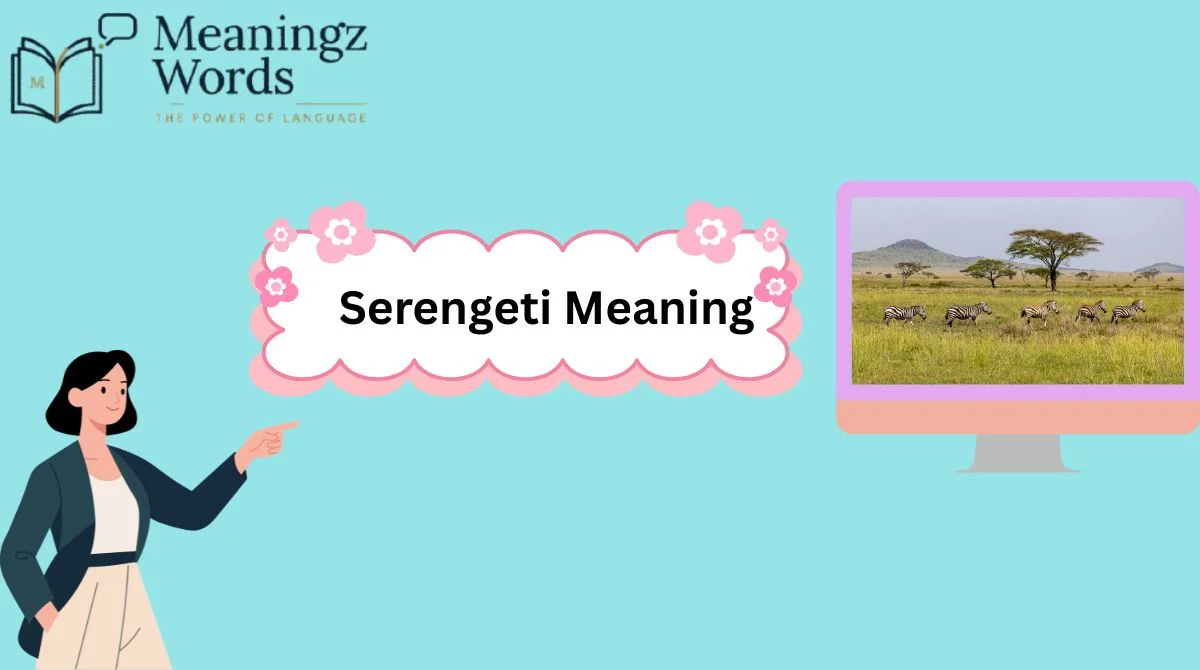
Serengeti meaning refers to a vast grassland ecosystem in East Africa, mainly located in Tanzania and extending into Kenya.
The word “Serengeti” comes from the Maasai language and means “endless plains” or “the place where the land runs on forever.”
People usually search this term because they see it in documentaries, wildlife discussions, travel content, movies, or nature-related conversations.
Understanding its meaning helps explain one of the world’s most famous wildlife regions and its cultural importance.
Quick Answer Box
| Category | Answer |
|---|---|
| Meaning | Endless plains or endless open land |
| Origin | Maasai language (Maa language) |
| Pronunciation | seh-ren-GET-ee |
| Category | Place name / Geographic term |
| Tone | Neutral, educational, natural |
| Used On | Travel, wildlife, geography, documentaries, education |
| Difficulty Level | Easy |
| One-line Definition | Serengeti is a famous African grassland region known for its huge plains, wildlife, and annual animal migration. |
What Does Serengeti Mean?
The Serengeti meaning comes from the Maasai word “Siringet”, which describes a place that appears endless or stretches far into the distance.
In simple words, Serengeti means “endless plains.”
The name perfectly describes the landscape because the region contains enormous open grasslands that seem to continue endlessly across the horizon.
The Serengeti is not just a single park. It is a large ecosystem made up of grasslands, forests, rivers, and wildlife areas that support millions of animals.
Where Does the Word Serengeti Come From?
The word Serengeti has its roots in the Maasai language, spoken by the Maasai people of East Africa.
The Maasai have lived around this region for generations and developed a deep connection with the land. Their language reflects the appearance and character of the environment.
The name describes what visitors often notice first:
- Wide open landscapes
- Endless grass-covered plains
- Huge skies
- Freedom of movement for animals
The meaning is closely connected to the physical appearance of the land.
What Is the Serengeti?
The Serengeti is one of the most famous natural regions on Earth.
It is located mainly in northern Tanzania, with the ecosystem extending into southwestern Kenya.
The area is famous for:
- Lions
- Elephants
- Cheetahs
- Leopards
- Giraffes
- Zebras
- Wildebeest
- Birds and many other species
The region is especially known for the Great Migration, one of the largest animal movements in the world.
Millions of wildebeest, zebras, and other animals travel across the plains searching for fresh grass and water.
Why Is the Serengeti Famous?
The Serengeti became globally famous because of its incredible wildlife and untouched landscapes.
1. The Great Migration
The Great Migration is the biggest reason many people know the Serengeti name.
During this natural event:
- Large herds move across the plains
- Animals follow seasonal rains
- Predators follow the migrating herds
It is often called one of nature’s greatest spectacles.
2. Wildlife Diversity
The Serengeti supports a wide variety of animals.
Some famous species include:
| Animal | Why It Is Famous |
|---|---|
| Lion | Known as one of Africa’s top predators |
| Cheetah | Famous for extreme speed |
| Elephant | Known for intelligence and size |
| Wildebeest | Central to the Great Migration |
| Zebra | Recognized for their striped patterns |
| Giraffe | Famous for their long necks |
3. Natural Beauty
The Serengeti represents the classic image many people imagine when they think of Africa:
- Golden grasslands
- Sunset views
- Large animal herds
- Open landscapes
This is why it appears frequently in wildlife documentaries and photography.
Serengeti Meaning in Different Contexts
The word “Serengeti” is mostly used as a geographical name, but people may encounter it in different areas.
Serengeti Meaning in Travel
In travel discussions, Serengeti usually refers to a safari destination.
Example:
“We are planning a Serengeti safari next year.”
Meaning:
The person wants to visit the Serengeti region to see wildlife.
Serengeti Meaning in Movies and Documentaries
Many wildlife films use “Serengeti” because the name represents African nature and wildlife.
Example:
“I watched a documentary about the Serengeti.”
Meaning:
The documentary was about animals, landscapes, or life in this African ecosystem.
Serengeti Meaning in Education
Students may encounter Serengeti in topics like:
- Geography
- Biology
- Environmental science
- Animal conservation
Example:
“The Serengeti ecosystem is important for biodiversity.”
Meaning:
The region supports many different living organisms.
How Do You Pronounce Serengeti?
The common pronunciation is:
seh-ren-GET-ee
The stress is usually placed on the middle part:
GET
Not:
❌ SE-ren-get-i
✅ seh-ren-GET-ee
Examples of Serengeti Used in Sentences
Example 1:
“The Serengeti is home to thousands of wild animals.”
Explanation:
This means the region provides a natural habitat for many species.
Example 2:
“They went on a safari through the Serengeti.”
Explanation:
They visited the area to observe wildlife.
Example 3:
“The Serengeti plains seem endless.”
Explanation:
This connects directly with the original meaning of the word.
Serengeti vs Safari: What Is the Difference?
Many people confuse these two terms.
| Term | Meaning |
|---|---|
| Serengeti | A specific wildlife region in East Africa |
| Safari | A journey or trip to observe wildlife |
Example:
“I went on a safari in the Serengeti.”
Meaning:
The safari is the activity, while Serengeti is the location.
Common Questions About Serengeti Meaning
Is Serengeti a country?
No. Serengeti is not a country.
It is a geographic region located mainly in Tanzania.
Is Serengeti a national park?
The Serengeti ecosystem includes the famous Serengeti National Park, but the entire Serengeti region is larger than the park itself.
What language does Serengeti come from?
The word comes from the Maasai language.
Why is Serengeti called endless plains?
Because its wide grasslands stretch across large distances and appear endless when viewed from the ground.
Is Serengeti only about animals?
No.
Although wildlife is its biggest attraction, the Serengeti is also important for:
- Culture
- Ecology
- Conservation
- Geography
- Scientific research
Common Misunderstandings About Serengeti
Myth 1: Serengeti means “desert”
Incorrect.
The Serengeti is mainly a grassland ecosystem, not a desert.
Myth 2: Serengeti is only one small location
Incorrect.
It refers to a large ecosystem containing multiple habitats.
Myth 3: Serengeti only exists for tourism
Incorrect.
It is a living ecosystem that supports wildlife, local communities, and conservation efforts.
Related Terms Connected to Serengeti
| Term | Meaning |
|---|---|
| Ecosystem | A community of living things and their environment |
| Grassland | A landscape dominated by grasses |
| Safari | Wildlife viewing journey |
| Migration | Movement of animals from one place to another |
| Conservation | Protection of nature and wildlife |
| Biodiversity | Variety of living species |
Why Understanding Serengeti Meaning Matters
Knowing the meaning of Serengeti helps people understand more than just a word.
It connects to:
- African geography
- Wildlife conservation
- Natural history
- Indigenous languages
- Environmental importance
A simple word carries the story of an entire landscape and the people connected to it.
FAQs
What does Serengeti mean in English?
Serengeti means “endless plains” or a vast open landscape.
What does Serengeti mean in Maasai?
In the Maasai language, Serengeti comes from a word describing a place that stretches endlessly.
Where is Serengeti located?
The Serengeti is mainly located in northern Tanzania and extends toward Kenya.
Why is Serengeti important?
It is important because it protects wildlife, supports biodiversity, and hosts the famous Great Migration.
What animals live in Serengeti?
Animals include lions, elephants, cheetahs, giraffes, zebras, wildebeest, and many bird species.
Conclusion
The Serengeti meaning is “endless plains,” a name that perfectly describes one of Africa’s most remarkable landscapes.
The word represents more than a location—it reflects nature, wildlife, culture, and the powerful connection between people and the environment.
When you hear “Serengeti,” think of vast grasslands, incredible animal journeys, and one of the world’s greatest natural ecosystems.

Noah Collins is a language writer and vocabulary researcher with a passion for making English easy to understand. As a contributor to MeaningzWords, he creates clear, accurate, and engaging content that helps readers expand their vocabulary, understand word meanings, and improve their communication skills with confidence.


