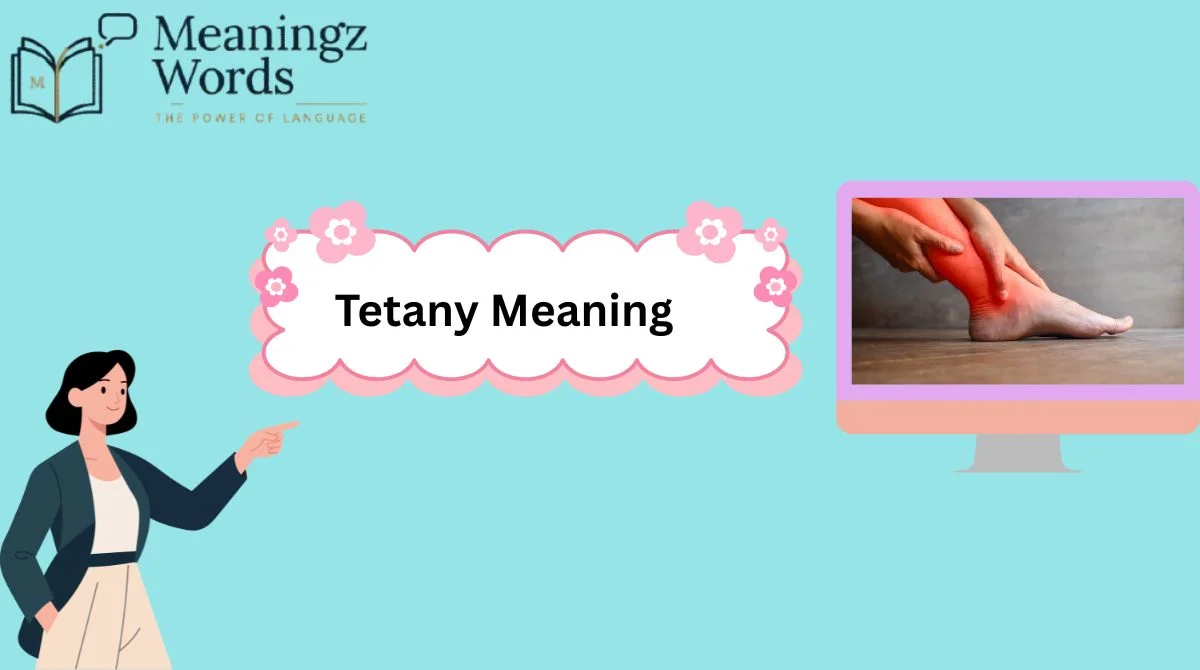
Tetany meaning refers to a condition where muscles experience involuntary contractions, cramps, spasms, or twitching because of increased nerve and muscle activity.
People usually search for this term after seeing it in medical reports, biology lessons, health articles, or discussions about calcium and electrolyte problems.
Understanding tetany matters because it can be a sign of an underlying imbalance that may need medical attention.
Quick Answer Box
| Category | Answer |
|---|---|
| Meaning | Involuntary muscle spasms or cramps caused by increased nerve and muscle excitability |
| Full Form | Tetany is not an abbreviation, so it has no full form |
| Pronunciation | TEH-tuh-nee |
| Category | Medical / Health Term |
| Tone | Neutral and scientific |
| Used On | Medical reports, textbooks, healthcare discussions |
| Difficulty Level | Intermediate |
| One-line Definition | Tetany is a condition where muscles contract uncontrollably due to abnormal nerve stimulation, often linked to low calcium levels. |
What Does Tetany Mean?
Tetany is a medical term used to describe repeated, involuntary muscle contractions. These contractions happen because nerves become overly sensitive and send extra signals to muscles.
The most common reason behind tetany is a low level of calcium in the blood, known as hypocalcemia. Calcium helps control normal communication between nerves and muscles, so a shortage can make muscles react abnormally.
Tetany does not mean normal muscle soreness or tiredness after exercise. It describes a specific type of muscle overactivity caused by changes inside the body.
What Causes Tetany?
Tetany can happen because of several conditions that affect minerals, hormones, or body chemistry.
Common causes include:
- Low calcium levels (hypocalcemia) — the most common cause
- Low magnesium levels
- Vitamin D deficiency
- Parathyroid gland problems
- Kidney disorders affecting mineral balance
- Certain medications
- Rapid breathing caused by anxiety or panic attacks
The exact cause can vary from person to person, so medical evaluation is often needed when symptoms appear.
What Are the Symptoms of Tetany?
Symptoms of tetany can range from mild muscle sensations to stronger spasms.
Common symptoms include:
- Muscle cramps
- Twitching or trembling
- Tingling around the mouth, fingers, or feet
- Stiffness in muscles
- Painful hand or foot spasms
- Muscle tightness
- Difficulty relaxing muscles
In more serious cases, tetany may affect larger muscle groups and cause more severe discomfort.
Types of Tetany
Tetany is commonly discussed in two forms:
Overt Tetany
Overt tetany produces clear and noticeable symptoms, such as:
- Strong muscle spasms
- Hand and foot contractions
- Visible twitching
This type is easier to identify because the physical signs are obvious.
Latent Tetany
Latent tetany is a milder form where symptoms may not be obvious. A person may experience:
- Tingling sensations
- Mild muscle twitching
- Increased nerve sensitivity
Doctors may use specific tests to detect signs of latent tetany.
Tetany vs Muscle Cramps: What Is the Difference?
Many people confuse tetany with ordinary muscle cramps. Although both involve muscle tightening, they are not the same.
| Feature | Tetany | Normal Muscle Cramp |
| Main cause | Nerve and mineral imbalance | Muscle fatigue, dehydration, or overuse |
| Muscle activity | Increased nerve stimulation | Temporary muscle tightening |
| Common trigger | Low calcium or electrolyte issues | Exercise or physical strain |
| Medical meaning | A health condition | Usually a temporary problem |
A normal leg cramp after exercise does not automatically mean someone has tetany.
Why Is Calcium Important in Tetany?
Calcium plays an important role in communication between nerves and muscles. It helps regulate when muscles contract and relax.
When calcium levels become too low, nerves may become more excitable. This can cause unnecessary signals to muscles, leading to spasms and twitching.
This is why tetany is often connected with calcium deficiency and electrolyte imbalance.
Tetany Meaning in Medical Reports
If you see the word tetany in a medical report, it usually refers to abnormal muscle contractions or signs of increased nerve and muscle activity.
Doctors may mention tetany when evaluating:
- Calcium levels
- Electrolyte balance
- Hormone problems
- Neurological symptoms
The term does not automatically identify a disease by itself. It describes a physical response or symptom pattern.
Tetany Examples in Real Life
Example 1: Calcium Deficiency
Situation:
A person develops tingling fingers and painful hand spasms because their calcium level is unusually low.
Explanation:
The muscle contractions may be described as tetany because they are caused by increased nerve sensitivity.
Example 2: Medical Examination
Doctor: “The patient shows signs of tetany.”
Meaning:
The doctor has noticed muscle responses that suggest abnormal nerve-muscle activity.
Is Tetany Dangerous?
Tetany can range from mild to serious depending on the underlying cause.
Occasional mild symptoms may come from temporary changes in body chemistry. However, repeated muscle spasms, severe cramps, or symptoms like difficulty breathing should be checked by a healthcare professional.
The important point is that tetany is usually a sign that something else may be affecting the body’s balance.
Common Misunderstandings About Tetany
Tetany Is Not the Same as a Seizure
Although both involve unusual muscle activity, they are different conditions. Tetany mainly involves muscle contractions related to nerve and mineral changes, while seizures involve abnormal electrical activity in the brain.
Tetany Does Not Always Mean Calcium Deficiency
Low calcium is a common cause, but other factors like magnesium imbalance or breathing-related changes can also contribute.
Tetany Is Not Just Muscle Pain
Muscle pain after activity is common. Tetany refers specifically to involuntary contractions caused by increased nerve-muscle activity.
Frequently Asked Questions
What is the simple meaning of tetany?
Tetany means uncontrolled muscle tightening, twitching, or spasms caused by increased nerve activity, often due to low calcium levels.
Is tetany a disease?
No. Tetany is usually a symptom or physical condition caused by another issue, such as mineral imbalance or certain health problems.
How do you pronounce tetany?
Tetany is pronounced TEH-tuh-nee.
What mineral deficiency causes tetany?
Low calcium is the most common cause, but low magnesium and other electrolyte problems may also contribute.
Can anxiety cause tetany?
Rapid breathing during anxiety or panic attacks can sometimes cause symptoms similar to tetany because it changes carbon dioxide levels in the blood.
What is the opposite of tetany?
There is no direct opposite term. The opposite concept would be normal muscle relaxation and controlled muscle movement.
Final Thoughts
Tetany means involuntary muscle contractions caused by increased nerve and muscle sensitivity.
It is most commonly linked to low calcium levels but can also result from other changes in the body’s mineral balance.
If you encounter the word tetany in a medical context, remember that it describes a symptom pattern rather than a single disease.
Understanding its meaning can help you better interpret health information and recognize when professional medical advice may be needed.

Noah Collins is a language writer and vocabulary researcher with a passion for making English easy to understand. As a contributor to MeaningzWords, he creates clear, accurate, and engaging content that helps readers expand their vocabulary, understand word meanings, and improve their communication skills with confidence.


