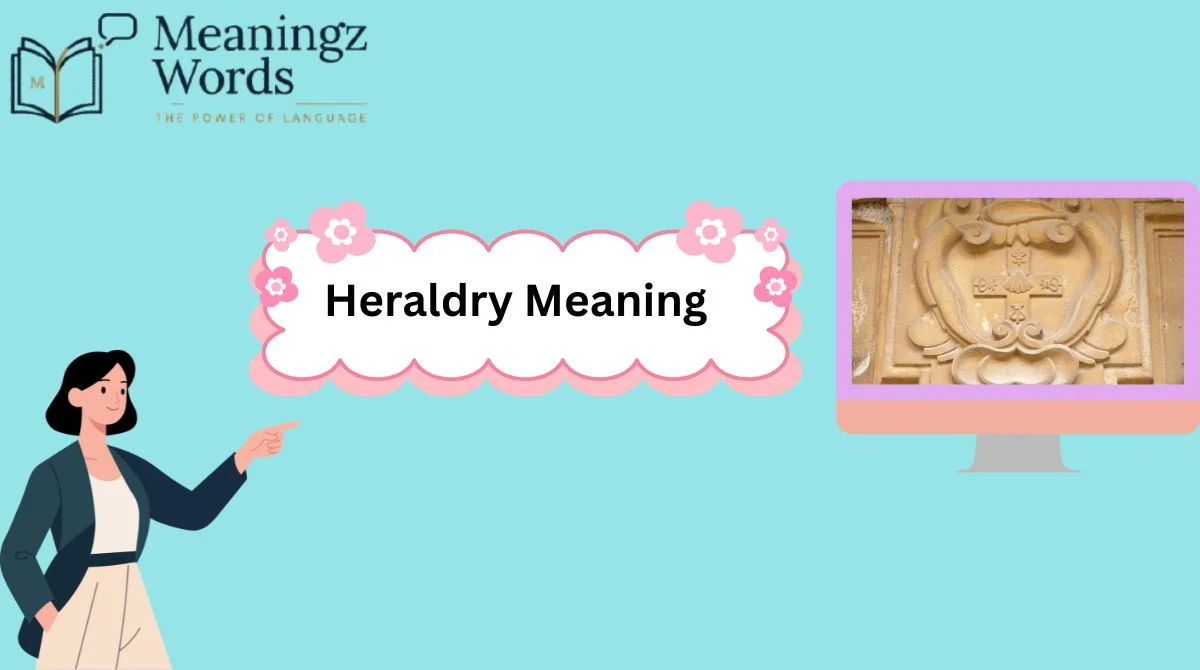
Heraldry meaning refers to the system of designing, using, and studying coats of arms, shields, symbols, and other visual signs that identify families, individuals, organizations, and groups.
People usually search for this term when they see family crests, medieval shields, royal symbols, logos, or fantasy designs in games and movies.
Understanding heraldry helps explain the stories, identities, and traditions hidden behind these symbols.
Quick Answer Box
| Category | Answer |
|---|---|
| Meaning | The study and use of coats of arms, family symbols, and traditional emblems |
| Full Form | No full form (heraldry is a complete word, not an abbreviation) |
| Pronunciation | HER-uhl-dree |
| Category | History, symbols, genealogy, design, culture |
| Tone | Formal, historical, academic |
| Used On | Family crests, flags, shields, official seals, military symbols, games, fantasy worlds |
| Difficulty Level | Beginner-friendly |
| One-line Definition | Heraldry is the art and science of creating and interpreting symbolic designs used to represent identity and heritage |
What Does Heraldry Mean?
Heraldry is a traditional system of visual identification that uses symbols, colors, patterns, animals, and designs to represent a person, family, organization, or nation.
The most common example of heraldry is a coat of arms. A coat of arms is a special design placed on a shield or other objects to show identity, achievements, ancestry, or status.
In simple words:
Heraldry is the language of symbols used to tell a story about who someone is or where they come from.
What Is the Origin of Heraldry?
Heraldry developed mainly in medieval Europe, especially between the 11th and 13th centuries.
During battles, knights wore helmets and armor that covered their faces. Soldiers needed a way to recognize allies and enemies from a distance. Symbols painted on shields and banners helped identify different warriors.
Over time, these battlefield markings became more organized. Families began passing symbols from one generation to another, creating the tradition of family coats of arms.
Heraldry later expanded beyond warfare and became connected with:
- Royal families
- Nobility
- Government organizations
- Universities
- Military groups
- Cities and regions
Why Was Heraldry Important?
Heraldry served several important purposes throughout history.
Identification
Before modern identification systems existed, symbols helped people recognize leaders, knights, and groups.
Example:
A soldier seeing a specific shield design could know which army or noble family was approaching.
Showing Family Heritage
Many families used coats of arms to represent ancestry, history, and achievements.
A family symbol could represent:
- Courage
- Loyalty
- Strength
- Wisdom
- Military success
Representing Authority
Kings, governments, and organizations used heraldic symbols to show power and legitimacy.
Examples include:
- Royal seals
- National emblems
- Official badges
What Are the Main Elements of Heraldry?
Heraldic designs are made from different parts, and each element can carry meaning.
Shield
The shield is the central part of a coat of arms.
It usually contains:
- Colors
- Shapes
- Animals
- Objects
- Patterns
The shield is where the main identity symbol appears.
Colors (Tinctures)
Heraldry uses specific colors, known as tinctures.
Common heraldic colors include:
| Color | Traditional Meaning |
|---|---|
| Gold (Or) | Generosity and wealth |
| Silver (Argent) | Peace and honesty |
| Red (Gules) | Courage and bravery |
| Blue (Azure) | Loyalty and truth |
| Green (Vert) | Hope and growth |
| Black (Sable) | Wisdom and seriousness |
| Purple | Royal status and dignity |
Meanings can vary depending on the culture and historical period.
Animals and Creatures
Animals are common in heraldry because they represent certain qualities.
Examples:
| Symbol | Common Meaning |
|---|---|
| Lion | Courage and strength |
| Eagle | Power and vision |
| Wolf | Loyalty and independence |
| Horse | Speed and bravery |
| Bear | Protection and strength |
| Dragon | Power and mystery |
Motto
Many coats of arms include a motto.
A motto is a short phrase expressing beliefs, values, or family ideals.
Example:
A family might use a motto about:
- Honor
- Courage
- Unity
- Faith
What Is a Coat of Arms?
A coat of arms is a specific heraldic design created to represent a person, family, organization, or place.
It may include:
- Shield
- Helmet
- Crown
- Animals
- Supporters
- Motto
- Decorative elements
Although people often use “heraldry” and “coat of arms” as if they mean the same thing, they are slightly different.
| Term | Meaning |
|---|---|
| Heraldry | The entire system and study of symbols |
| Coat of Arms | One specific heraldic design |
What Is the Difference Between Heraldry and a Family Crest?
Many people use “family crest” and “coat of arms” interchangeably, but historically they are different.
| Term | Meaning |
|---|---|
| Heraldry | The overall tradition of symbolic identification |
| Coat of Arms | The complete official design |
| Crest | A specific decoration placed above the helmet in a coat of arms |
| Family Crest | A popular modern term often used for family symbols |
A true heraldic crest was only one part of a complete coat of arms.
How Is Heraldry Used Today?
Although heraldry began in medieval Europe, it is still used today.
Government and Institutions
Many organizations use heraldic-style symbols.
Examples:
- Universities
- Military organizations
- Cities
- Historical societies
Family History Research
People studying genealogy often explore heraldry to understand family traditions.
However, finding a surname does not automatically mean someone has the right to use a historical coat of arms. Heraldic rights are usually connected to specific family lines, not everyone with the same last name.
Entertainment and Gaming
Heraldic designs appear frequently in:
- Fantasy games
- Role-playing games
- Movies
- Books
- Fictional kingdoms
Games often use shields, banners, and symbols inspired by medieval heraldry.
Heraldry Meaning in Modern Culture
Today, heraldry is not only about medieval history. It has become a way to represent identity and storytelling.
Modern uses include:
- Sports team logos
- Company emblems
- Fantasy world-building
- Personal branding
- Historical reenactments
Many designers borrow heraldic ideas because symbols create strong emotional connections.
Examples of Heraldry Symbols and Their Meanings
| Symbol | Meaning Often Associated With |
|---|---|
| Crown | Leadership and authority |
| Sword | Justice and courage |
| Castle | Protection and strength |
| Tree | Growth and family roots |
| Star | Hope and guidance |
| Ship | Exploration and adventure |
Common Questions About Heraldry Meaning
Is Heraldry Only About Royal Families?
No. While kings and nobles used heraldry extensively, it was also used by cities, organizations, military groups, and individuals.
Does Every Family Have a Heraldic Symbol?
No. Many families do not have an officially recognized coat of arms.
A surname alone does not guarantee a family owns a specific heraldic design.
Is Heraldry Still Used Today?
Yes. Modern organizations, governments, universities, and fictional worlds still use heraldic designs.
Is Heraldry the Same as a Logo?
Not exactly.
A logo is a modern branding tool, while heraldry follows traditional rules involving symbols, colors, and historical meanings.
| Heraldry | Logo |
|---|---|
| Historical system | Modern branding |
| Often follows rules | Flexible design |
| Connected to identity and heritage | Connected to marketing |
Common Misunderstandings About Heraldry
Myth: Anyone Can Create an Official Family Coat of Arms
Creating a design is possible, but an official historical coat of arms usually follows legal or traditional heraldic systems.
Myth: Heraldry Only Belongs to Europe
European heraldry is the most widely known, but many cultures have their own traditions of symbolic identification.
Myth: Every Symbol Has One Fixed Meaning
Symbol meanings can change depending on:
- Time period
- Country
- Family history
- Cultural context
How to Understand a Heraldic Symbol
When looking at a coat of arms, consider:
- Colors – What emotions or values do they represent?
- Animals – What qualities might they symbolize?
- Objects – What story might they tell?
- Motto – What message does it communicate?
- Historical background – Who used the symbol and why?
Heraldry is best understood as a combination of art, history, and storytelling.
FAQs
What is the simple meaning of heraldry?
Heraldry is the study and use of symbols, coats of arms, and designs that represent people, families, organizations, or places.
What does a heraldic symbol mean?
A heraldic symbol represents identity, values, history, achievements, or traditions.
Where is heraldry commonly seen?
Heraldry appears on coats of arms, flags, seals, military symbols, historical documents, games, and fantasy artwork.
Why are animals used in heraldry?
Animals are used because they represent qualities such as courage, loyalty, power, and wisdom.
What is heraldry in genealogy?
In genealogy, heraldry helps researchers study historical family symbols and connections, but it does not prove that every person with a surname belongs to a heraldic family.
Conclusion
Heraldry meaning goes beyond simple decoration. It is a historical language of symbols that tells stories about identity, family, achievements, and traditions.
From medieval shields to modern logos and fantasy worlds, heraldic designs continue to influence how people represent ideas and belonging.
When you see a coat of arms or symbolic emblem, look beyond the artwork. The colors, animals, and objects often carry a deeper story about the people or groups they represent.

Noah Collins is a language writer and vocabulary researcher with a passion for making English easy to understand. As a contributor to MeaningzWords, he creates clear, accurate, and engaging content that helps readers expand their vocabulary, understand word meanings, and improve their communication skills with confidence.


